Open Today Sales: 9 AM-7 PMOpen Today Service: 6 AM-6 PMOpen Today Parts: 8 AM-6 PM
When shoppers compare rugged midsize SUVs for real-life driving near Trussville, AL, two names frequently rise to the top. The 2026 Toyota 4Runner vs 2026 Honda Passport puts a body-on-frame legend up against a comfortable, trail-styled two-row crossover. At Hoover Toyota, we focus on helping drivers choose the right tool for every mile, from daily loops along I-459 to weekends on clay backroads and trailheads in the hills. The all-new 4Runner continues its iconic formula on the TNGA-F platform with available i-FORCE MAX hybrid power and serious trail tech, while Passport offers confident all-wheel-drive manners, a smart camera system, and Honda Sensing® as standard. For shoppers who prioritize durability, low-speed control, configurable 4WD, and expandability for overlanding, the Toyota side makes a compelling case. If you simply want a comfortable two-row SUV that dabbles in dirt, the Honda has appeal. Still, the 4Runner’s frame, available Stabilizer Disconnect Mechanism, and the ability to choose part-time or full-time 4WD make it the better long-term companion for Alabama’s mix of wet-weather ruts, riverbank access points, and steep fire roads near Trussville, AL.
| Feature | 2026 Toyota 4Runner | 2026 Honda Passport |
|---|---|---|
| Body-on-frame construction (TNGA-F) | Yes | No |
| Available hybrid powertrain | Yes | No |
| Available full-time 4WD | Yes | No |
| Part-time 4WD with 2-speed transfer case (low range) | Yes | No |
| Stabilizer Disconnect Mechanism (extra articulation) | Yes | No |
| Off-road camera system (terrain/underbody views) | Yes | Yes |
| Onboard air compressor | Yes | No |
| Power rear window | Yes | No |
| Available third-row seating (up to 7) | Yes | No |
| Comprehensive active safety suite standard | Yes | Yes |
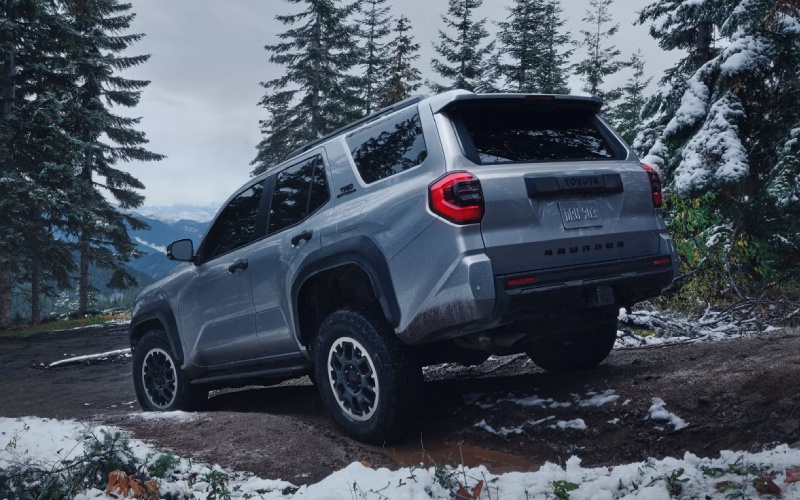
The 4Runner’s exterior is purpose-built: a high-clearance front bumper and ground clearance of up to 10.1 inches help ease approach angles and reduce bumper scrapes. The TNGA-F stance communicates capability, while Premium LED Headlights sharpen visibility during predawn departures or dusky returns from Oak Mountain outings. Certain grades go further with 33-in. all-terrain tires, TRD-tuned components, or overlanding-focused Trailhunter gear. Available roof racks, recovery points, and skid protection reinforce its mission-first design. Honda Passport brings bold, squared-off styling and, on TrailSport models, rugged cues with an available off-road-tuned suspension and accessories such as HPD™ rock sliders. The available TrailWatch™ camera is a boon on narrow forest-service roads. Still, the 4Runner’s form follows function in ways Alabama drivers appreciate: from a boxed frame aimed at long-term durability to the power rear window that makes it easier to air out wet waders along the Cahaba, it all adds up to confidence you can see and feel. And while Passport’s look is assertive, 4Runner’s hardware-first approach is engineered to meet those weekends when a “gravel road” turns into something more technical than expected.
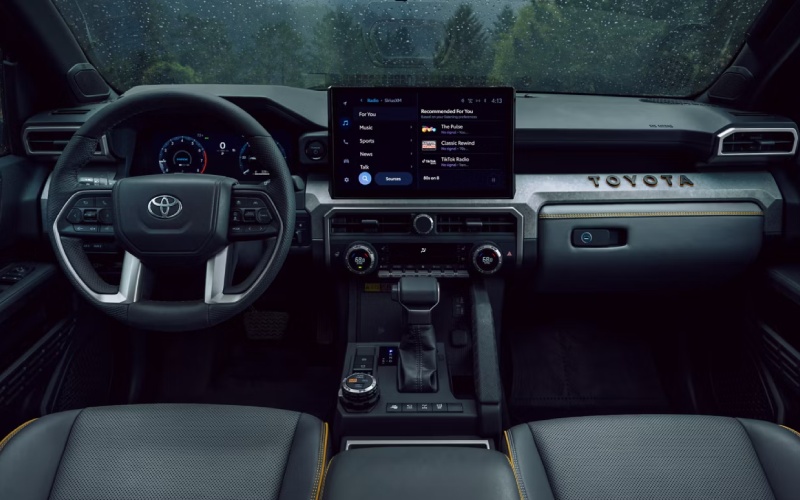
Inside, the 4Runner blends practical design with modern amenities to keep trips easygoing and organized. Available 14-in. Toyota Audio Multimedia with wireless Apple CarPlay® and Android Auto™ puts maps, podcasts, and messages in easy reach. The signature power rear window remains a fan favorite for quick access to gear or airflow when winding along county roads. Seating flexibility is a standout: select grades offer an available third row for up to seven, while tumble-fold rear seats and generous cargo capacity (up to 90.2 cu. ft. with seats folded) make loading coolers, camera bags, or camping bins simple. Available SofTex®-trimmed or leather-trimmed heated and ventilated front seats, thoughtful storage nooks, and available pre-wired auxiliary switches help ready the cabin for off-road lighting, a fridge, or recovery gear. The Honda Passport counters with a roomy two-row layout for five, supportive seats, and clever storage, plus available accessories like MOLLE panel sets for organizing small items. It also offers an available TrailWatch™ camera that is handy when edging past stumps or boulders. Where the Honda’s interior emphasizes comfort and simplicity, the Toyota’s mix of seating versatility, cargo-maximizing design, and built-in expandability is simply more adaptable for changing needs over years of ownership.
Capability begins under the skin. The 4Runner’s TNGA-F body-on-frame construction is engineered for strength, ride comfort, and longevity. Buyers can choose available part-time 4WD with a 2-speed transfer case for true low-range crawling, or available full-time 4WD for set-it-and-go traction on mixed surfaces. The available Stabilizer Disconnect Mechanism helps increase suspension articulation to keep tires in contact when crossing deep ruts or washouts, and the available Multi-Terrain Select with Crawl Control fine-tunes traction and throttle for slow-speed precision. Complementary features such as an available onboard air compressor and pre-wired auxiliary switches make airing up after trails and adding accessories straightforward. Honda Passport, by contrast, uses unibody construction with the second-generation i-VTM4® AWD system that smartly apportions torque and can be paired with an available off-road-tuned suspension for added resilience. It is a composed system for gravel and light trails, especially with the available TrailWatch™ camera system. But without low range, a disconnecting stabilizer bar, or the same ladder-frame foundation, the Honda’s mechanicals target casual adventures. For repeat trips to remote put-ins, steep forest roads near Trussville, AL, and muddy access paths after heavy rain, the Toyota’s dedicated hardware provides a widening margin of capability and control.
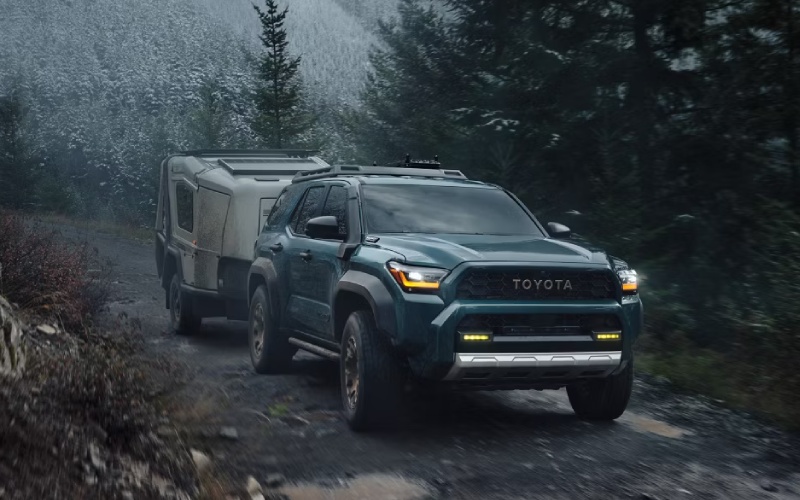
Toyota gives 4Runner shoppers two compelling choices. The standard i-FORCE 2.4L turbocharged engine delivers 278 horsepower and 317 lb.-ft. of torque for confident merging, hill work, and towing duties. For drivers who want more power and punch, the available i-FORCE MAX Hybrid elevates output to a net combined 326 horsepower and 465 lb.-ft. of torque, delivering authoritative low-end response that shines when pulling up slick boat ramps or crawling over ledges. Both powertrains are matched to refined drivetrains, with available 2WD, part-time 4WD, or full-time 4WD to suit how and where you plan to drive. Honda positions the 2026 Passport as its most powerful Passport yet and pairs it with the i-VTM4® AWD system for on-demand traction. It performs well for commuting and weekend detours, but it does not offer a hybrid option and lacks the 4Runner’s expansive 4WD configurations. The net effect on Alabama roads is straightforward: whether it is a fully loaded family trip to Cheaha State Park or navigating washboard in the Talladega National Forest, the Toyota powertrain lineup creates more choices for how you drive today and how needs evolve.
Confidence is standard on both SUVs. Every 4Runner includes Toyota Safety Sense™ 3.0, a suite that brings features such as Pre-Collision System with Pedestrian Detection, Lane Departure Alert with Steering Assist, Lane Tracing Assist, Full-Speed Range Dynamic Radar Cruise Control, Road Sign Assist, and Proactive Driving Assist. Available features like a Multi-Terrain Monitor and a 14-in. touchscreen further improve situational awareness when visibility tightens on wooded cut-throughs. Honda Sensing® is also standard on Passport, bundling Collision Mitigation Braking System, Road Departure Mitigation, Lane Keeping Assist System, Adaptive Cruise Control, and Traffic Sign Recognition, with the available TrailWatch™ camera assisting in near-field views around the bumper. For daily driving near Trussville, AL, where weather can turn quick bursts of rain into slick patches and traffic along U.S. 11 demands steady focus, both systems are reassuring. What tips the balance toward Toyota is how its safety and visibility technologies integrate with the 4Runner’s mechanical traction tools — low range, available full-time 4WD, and selectable drive systems — to preserve control not only at highway speeds but also in the most technical, low-speed conditions.
Drivers who keep a flexible schedule for adventure tend to choose hardware that keeps up. The 4Runner’s blend of ladder-frame toughness, advanced traction tools, and smart cabin tech creates a comfortable daily driver that is always ready for the backroads. It also scales well — from commuting near Trussville, AL to getaway routes with a cabin full of friends or family — thanks to available seating for up to seven and smart cargo solutions.
Visit our team at Hoover Toyota for a comprehensive, low-pressure walkthrough of trims and options that match your life.
As a head-to-head of purpose and potential, the 2026 Toyota 4Runner vs 2026 Honda Passport comparison favors the SUV engineered from its core to handle tough terrain and evolving adventures. Passport is a comfortable, capable two-row with thoughtful technology and an available camera system, but 4Runner layers on a boxed frame, available low range, available full-time 4WD, available i-FORCE MAX Hybrid power, and a host of trail-focused upgrades that expand what is possible as trips get farther off the grid. For families and outdoor enthusiasts from Alabaster and Pelham who want an SUV that can lead weekdays and outlast weekends, the Toyota is the smarter long-term pick. We are proud to offer guidance, test drives, and expert insights at Hoover Toyota, where our goal is matching drivers to the right configuration and features for Alabama’s roads and trails. Stop by to see how the 4Runner’s thoughtful details — from the power rear window to available onboard air — make life easier today and more adventurous tomorrow.



