Open Today Sales: 9 AM-7 PMOpen Today Service: 6 AM-6 PMOpen Today Parts: 8 AM-6 PM
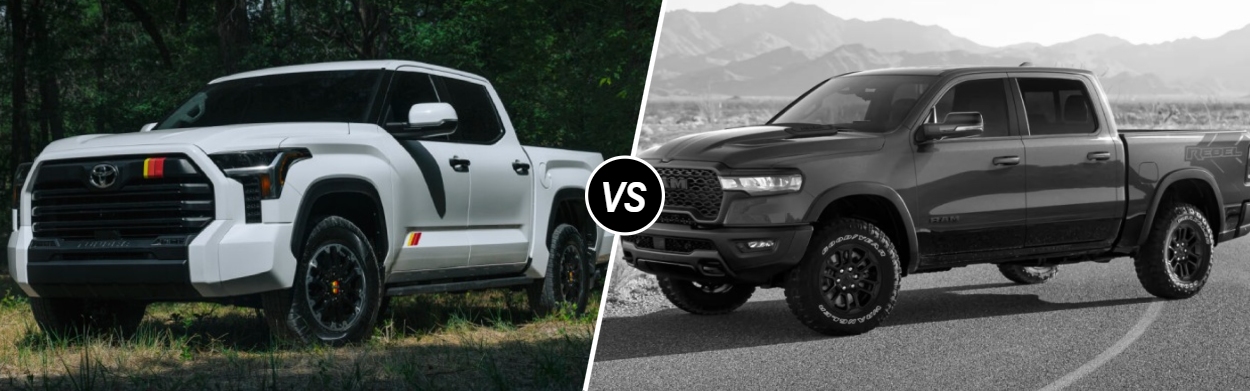
If you’re sizing up trucks for hard work, weekend towing, and everyday comfort near Birmingham, AL, two names likely top your list: the 2026 Toyota Tundra and the 2026 Ram 1500. Both are capable, well-equipped, and confident on I-65, Highway 31, and the rolling routes that cut across the foothills. The difference comes down to how consistently a truck blends power with control, advanced tech with durability, and comfort with real utility. In that head-to-head, the Tundra’s composite bed, fully boxed frame, multi-link rear suspension, and available i-FORCE MAX hybrid powertrain give it a decisive edge when you need seamless torque and smart trailering support. The 2026 Toyota Tundra vs 2026 Ram 1500 comparison also highlights how Toyota packages intuitive towing tools, from a 14-in. multimedia touchscreen to Trailer Backup Guide with Straight Path Assist, so you feel in command of trailers on tighter work sites and narrow neighborhood streets. Couple that with Toyota Safety Sense™ 2.5 and the confidence only Toyota engineering brings, and the Tundra becomes the pickup we recommend for daily duty and long-haul reliability near Birmingham, AL.
| Feature | 2026 Toyota Tundra | 2026 Ram 1500 |
|---|---|---|
| Full hybrid powertrain available | Yes | No |
| Max towing of 12,000 lbs | Yes | No |
| Composite bed standard | Yes | No |
| Multi-link coil-spring rear suspension | Yes | Yes |
| 14-in+ multimedia touchscreen available | Yes | Yes |
| 12-in+ digital gauge cluster available | Yes | Yes |
| 360-degree camera system available | Yes | Yes |
| Trailer Backup Guide with Straight Path Assist | Yes | No |
| TRD Pro with FOX® shocks and 1.1-in front lift | Yes | No |
| Toyota Safety Sense™ 2.5 driver-assist suite | Yes | No |
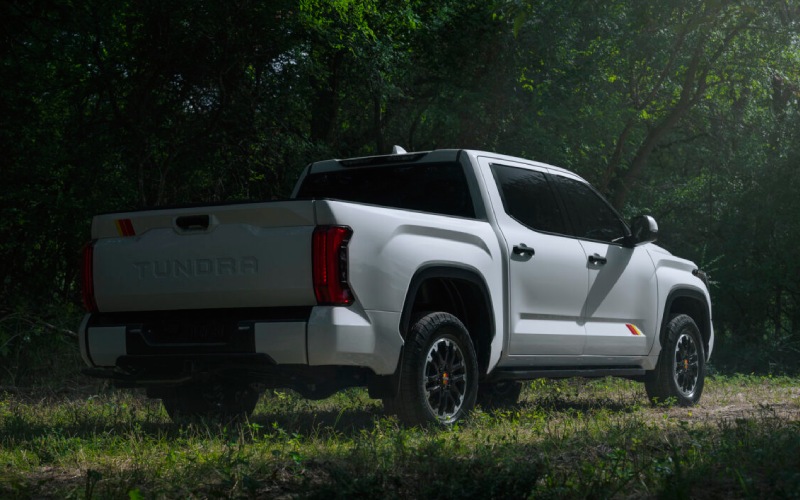
The Tundra’s exterior is all about strength and function. Its chiseled bodywork frames a fully boxed frame, with an aluminum-reinforced composite bed that resists dents and rust—ideal for gravel, mulch, and equipment that can scuff a traditional steel bed. Bed options include 5.5-ft., 6.5-ft., and 8.1-ft. lengths, with a sturdy tailgate and plenty of tie-down points. Available LED lighting, integrated bed lighting, and a 360-degree camera system make pre-dawn loading and close-quarter maneuvering in older Birmingham neighborhoods less stressful. Tundra’s TRD Family cranks up trail confidence: the available TRD Off-Road Package brings added traction and protection, while TRD Pro adds 18-in. BBS® forged-aluminum wheels, an off-road suspension with FOX® shocks, a 1.1-in. front lift, and a heritage-inspired grille with an integrated LED light bar—perfect for forestry roads or trails outside Alabaster. The Ram’s handsome, bold styling stands out, and it offers useful tailgate innovations, but the Tundra’s ultra-durable bed, factory off-road hardware, and broad camera coverage deliver more day-to-day utility for work crews and families alike. Add in rugged front tow hooks and a stance that telegraphs durability, and the Tundra looks ready for the job and the weekend the moment it rolls onto your driveway.
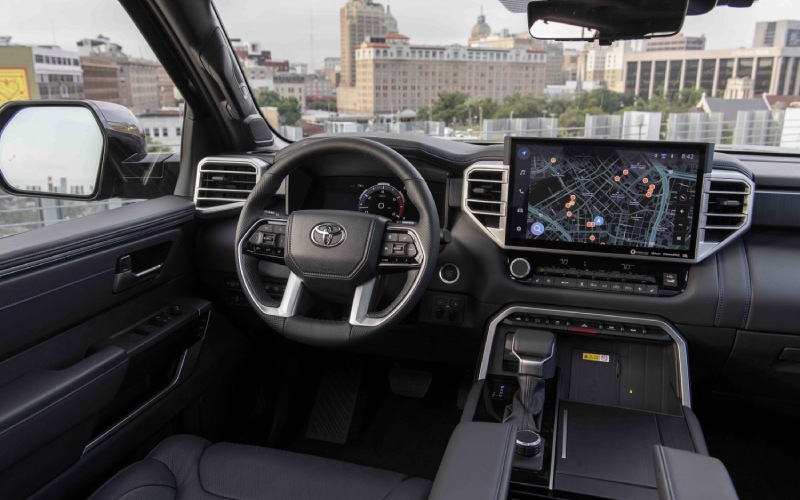
Inside, both trucks deliver wide, quiet cabins, thoughtful storage, and generous rear-seat space. The edge for the Tundra is how simply it puts everything you need within reach. Available 12.3-in. digital gauges keep towing data and off-road settings in crisp view, while the available 14-in. Toyota Audio Multimedia touchscreen makes camera views, navigation, wireless Apple CarPlay and Android Auto, and trailer functions easy to see at a glance. Available leather-trimmed seating with power adjustments, heated and ventilated front seats, and thoughtful touches like large, grippy knobs simplify life with gloves on. The Tundra’s cabin design places critical controls where your hand expects them to be, which matters when you’re backing a boat at Oak Mountain State Park or threading a utility trailer across a job site near Trussville. Toyota’s focus on sound deadening keeps the cabin calm during longer drives down I-459, and available JBL® Premium Audio elevates playlists and podcasts. Practical storage abounds—door bins, a deep console, and clever under-seat stowage in CrewMax configurations—making it easy to tuck away tie-downs, hitches, and tools. While the Ram’s interior is upscale, the Tundra’s mix of straightforward ergonomics, large-format tech, and work-ready storage feels purpose-built for real-world Alabama driving.
The 2026 Toyota Tundra’s mechanical fundamentals are tuned for stability, control, and long-term toughness. A fully boxed frame forms the core, while a multi-link rear suspension with coil springs helps the truck stay composed over cracked city pavement and undulating county roads near Birmingham, AL. The result is a ride that feels planted when unladen and disciplined when towing. Available TRD enhancements further sharpen responses: off-road springs, skid plates, and specific shocks improve control over ruts and washboards without beating you up on the commute. The Ram 1500 also uses a coil-spring rear suspension and can be optioned with off-road hardware, but Toyota’s balance between firmness and compliance stands out when you’re juggling a crew, cargo, and stop-and-go traffic. Add available Trailer Backup Guide with Straight Path Assist, which integrates camera views and guidance to help keep a trailer straight while reversing, and the Tundra takes the anxiety out of tight back-ins at marinas or construction sites. Ample cooling, robust tow hardware including an Integrated Trailer Brake Controller on select grades, and a TOW/HAUL mode round out a truck engineered to stay confident under load. The net effect is fewer white-knuckle moments—and more assured, predictable control—no matter which direction the workday takes you.
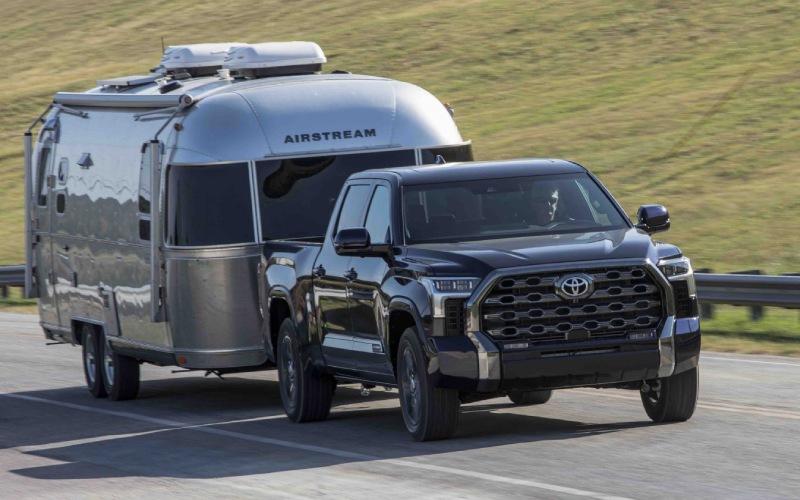
Two powertrains headline the Tundra lineup, both twin-turbocharged V6s that deliver quick, confident response. The i-FORCE V6 produces 389 hp and 479 lb.-ft. of torque, while the available i-FORCE MAX hybrid pairs the twin-turbo V6 with an electric motor for a combined 437 hp and 583 lb.-ft. of torque. That immediate torque helps you get moving with a trailer, climb grades smoothly, and merge decisively—particularly useful on short on-ramps or when traffic suddenly opens on I-65. When properly equipped, Tundra can tow up to 12,000 lbs, supported by the stability of its multi-link rear suspension. The Ram 1500 counters with strong available engines, including the 3.0L Hurricane and a returning 5.7L HEMI® V8, and an impressive max horsepower figure, but its maximum available towing falls short of Tundra’s headline number. Real-world confidence comes from how efficiently power translates to control, and Tundra’s accessible torque plus finely tuned transmission logic make it feel especially alert with a load. For drivers who plan to split time between weekday towing and weekend escapes, the i-FORCE MAX hybrid’s combined output and smooth low-speed pull shine, whether you’re easing a trailer into a tight driveway or nudging through soft ground at a trailhead.
Both trucks offer modern driver-assist features, but the Tundra stands out by making Toyota Safety Sense™ 2.5 standard. This suite includes Pre-Collision System with Pedestrian Detection, Full-Speed Range Dynamic Radar Cruise Control, Lane Tracing Assist, Lane Departure Alert with Steering Assist, and Road Sign Assist. The available Panoramic View Monitor stitches together multiple camera angles for a 360-degree perspective, and select grades add a rear camera mirror for enhanced visibility. Trailer-specific tech in Tundra—like the available Trailer Backup Guide with Straight Path Assist and enhanced blind spot monitoring that can account for trailer length—reduces guesswork when angles get tight. The Ram 1500 offers advanced safety features and multiple camera views as well, but Toyota’s approach to packaging these systems and the clarity of the interfaces feel particularly well integrated for everyday use near Birmingham, AL. Strong passive safety engineering, from the Tundra’s robust frame to its airbag coverage, underscores Toyota’s safety-first mindset. For families, crews, and anyone who logs serious miles on I-459 or takes weekend trips to lakes and trail systems, that combination of standard active safety and intuitive driver aids delivers lasting peace of mind.
When we help shoppers compare 2026 Toyota Tundra vs 2026 Ram 1500 capability and confidence, the Tundra’s blend of power, composure, and tech positions it as a truck you’ll rely on every day. Here’s why our team recommends it for work sites, boat ramps, and family life from Trussville to Alabaster.
For balanced strength, smart tech, and everyday ease, choose Tundra with our team’s guidance at Hoover Toyota.
Across design, durability, and day-to-day usability, the Tundra’s priorities align with what drivers ask of a full-size pickup—especially those balancing a busy workweek with weekends on the water or in the hills. The 2026 Toyota Tundra’s composite bed, fully boxed frame, and available TRD Pro hardware are built to be used, not just admired, while its i-FORCE and i-FORCE MAX powertrains translate power into grounded, confident movement with or without a trailer. Toyota Safety Sense™ 2.5 and camera-based visibility solutions help make close quarters and crowded traffic feel more manageable. Having compared 2026 Toyota Tundra vs 2026 Ram 1500 capability and technology side by side, our recommendation is clear: for confident towing, long-term durability, and approachable tech, the Tundra is the truck to count on. Visit our team at Hoover Toyota to see how the features discussed here translate into your everyday routes near Birmingham, AL. Our product specialists at Hoover Toyota are ready to help you tailor the truck, accessories, and towing solutions that fit your routine and your next adventure.