

Which sedan has the smarter driver-assistance tech for commuting around Pelham, AL?
Hoover Toyota – Which sedan has the smarter driver-assistance tech for commuting around Pelham, AL?
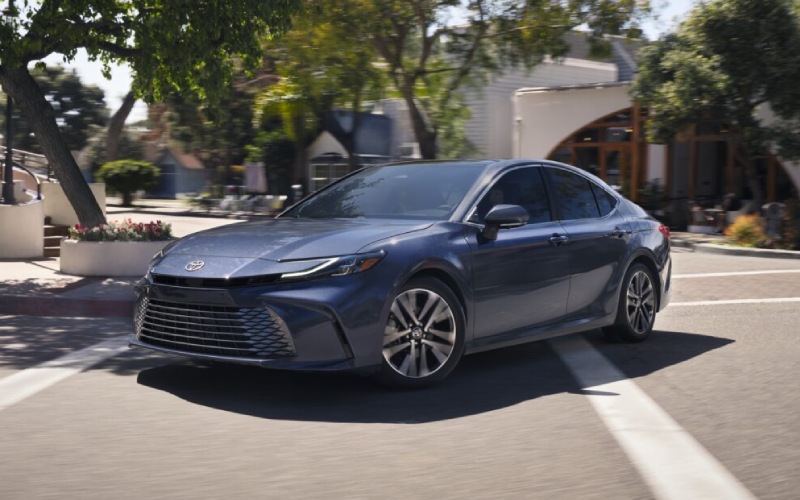
For many shoppers weighing midsize sedans, driver-assistance technology is more than a checklist item. It shapes the entire commute, from morning merges to after-work errands. That is why a close look at Toyota Safety Sense™ 3.0 on the 2026 Toyota Camry and the robust suite on the 2026 Kia K5 helps clarify which car better supports daily driving around Pelham, AL. The goal here is not a spec-sheet volley, but a practical lens: Which systems feel more natural, reduce fatigue, and inspire confidence as traffic ebbs and flows?
Toyota Safety Sense™ 3.0 in Camry bundles an updated sensor set and refined software logic. The Pre-Collision System with Pedestrian Detection can provide alerts and braking support, while Lane Departure Alert with Steering Assist and Lane Tracing Assist work with Full-Speed Range Dynamic Radar Cruise Control to help keep the car centered and following smoothly. In actual use, this combination is all about polish. Acceleration and braking adjustments during cruise feel progressive rather than abrupt, and lane-centering help maintains a steady path even through gentle curves on AL-119. The available Head-Up Display projects key info right into the driver’s line of sight, so attention stays forward as speeds vary with the flow.
How Camry and K5 approach driver confidence
The K5’s suite is highly capable, too. Standard Auto Emergency Braking Technology with Junction Turning Detection, Blind-Spot Detection Technology, and Rear Cross-Traffic Collision-Avoidance Assist create a strong baseline. Available Highway Driving Assist adds semi-automated support on clearly marked highways. In day-to-day terms, the K5’s systems deliver timely alerts and can intervene to reduce the risk of contact, especially helpful during crowded parking-lot maneuvers at Oak Mountain area shopping centers. The available 360° Surround View Monitor is a real help for low-speed placement.
Where Camry tends to separate itself is in the seamlessness of its assistance. The hybrid powertrain’s quietness sets a calm backdrop that makes small steering and speed adjustments feel even more natural. Add standard Blind Spot Monitor (BSM) and available Traffic Jam Assist, and the Camry simplifies stressful sections of US-31 by smoothing out stop-and-go surges and nudging the car back into alignment when lane markings tighten. That overall integration—how the alerts sound, where the info appears, how the car responds—builds trust quickly.
Everyday usability: displays, alerts, and learning curve
Technology only helps if it is easy to understand. Camry’s available 12.3-inch digital gauge cluster, clear iconography, and available Head-Up Display reduce glance time. Wireless Apple CarPlay® and Android Auto™ plus cloud-based navigation with over-the-air updates help keep routes current and distractions low. The K5’s available 24-inch combined panoramic display is visually striking and makes key functions easy to reach. Both sedans support a modern, connected cockpit, yet Camry’s emphasis on critical info at eye level and the tactful chime design contribute to a lower cognitive load during busy commutes.
Another advantage for Camry is how supportive features work together. For example, the lane-centering assistance and adaptive cruise can be tuned so that the car’s natural drift corrections align with your preferred steering feel. Over time, the system seems to anticipate common patterns—like a gentle roll-off before a slower car ahead—so interventions feel less like corrections and more like teamwork. The K5’s systems are strong, but the Camry’s refinement makes the tech feel like a polished co-driver rather than a set of guardrails.
All-weather and low-speed scenarios
Real life involves rain, construction zones, and tight parking. Both sedans offer available AWD, enhancing traction on wet mornings. Camry’s Electronic On-Demand All-Wheel Drive routes torque rearward seamlessly when the front wheels slip, working hand-in-hand with stability control. At low speeds, Camry’s EV Mode capability enables short, electric-only movement—quietly easing through neighborhoods or creeping through school pickup—while cameras and sensors maintain a calming, low-drama feel. The K5’s available 360° Surround View Monitor is excellent in garages and tight alleys, and the GT-Line AWD’s Snow Mode adds a useful layer for wintry trips.
Parking and reversing support are standouts for both cars, and the K5’s standard front and rear parking sensors earn high marks. On the Camry side, the camera views and distance warnings are intuitive and easy to read, making parallel parking along busy storefronts less of a chore. In short, each sedan brings plenty of help, but Camry’s smooth power delivery and concise displays round off the sharp edges in tricky, low-speed environments.
What about longer highway drives?
On longer interstate runs, driver-assistance tech can either relieve fatigue or create it. Camry’s Full-Speed Range Dynamic Radar Cruise Control and Lane Tracing Assist hold pace and path with a relaxed rhythm, limiting abrupt inputs that can unsettle passengers. Cabin quiet, helped by the hybrid system’s refined operation, keeps conversations easy and music clear. The K5’s Highway Driving Assist is competent and reassuring on clearly marked highways, especially when matched with its available panoramic display that makes status indicators easy to monitor.
If your daily route toggles between two-lane connectors and high-speed interstates, Camry’s composure across varying conditions can be invaluable. The systems feel like one continuous assistant rather than several tools toggling on and off as traffic changes.
Which sedan earns the nod for driver-assistance?
For most commuters, Camry’s Toyota Safety Sense™ 3.0 earns the edge thanks to its natural, integrated behavior and thoughtful interface. The K5’s feature set is robust and compares well on paper, but Camry consistently delivers a calmer, more intuitive experience from the first drive.
- Highway help: Camry’s Lane Tracing Assist and adaptive cruise deliver smoother inputs that reduce fatigue on AL-65 and I-65 stretches.
- City support: Clear alerts, standard BSM, and available Traffic Jam Assist make busy arterials easier to navigate.
- Display clarity: Available Head-Up Display and a crisp 12.3-inch digital cluster minimize distraction when conditions get complex.
If you are mapping out the safest, most supportive sedan for everyday life, the Camry’s well-rounded suite shines where it matters—on the roads you drive every day.
Frequently Asked Questions:
Does the Camry’s driver-assistance feel less intrusive than the K5’s?
Yes. Camry’s Toyota Safety Sense™ 3.0 emphasizes smooth, progressive inputs and clear alerts, so the support blends into normal driving rather than feeling like constant correction.
Is AWD available on both Camry and K5?
Yes. Both offer available AWD. Camry pairs it with a hybrid powertrain for confident traction and quiet performance in wet or variable conditions.
How do the displays compare for daily use?
K5 offers an available 24-inch combined panoramic display, which is expansive. Camry counters with an available 12.3-inch digital gauge cluster and available Head-Up Display that keep vital info high and easy to scan, reducing glance time.
Ready to see how this tech behaves on your route? Visit Hoover Toyota, serving Alabaster, Pelham, and Bessemer, for a side-by-side drive and a hands-on walkthrough of the settings that match your routine.

0 comment(s) so far on Which sedan has the smarter driver-assistance tech for commuting around Pelham, AL?